Please note that due to incompatibilities between the FrontPage software I use on my PC and the new ISP host server software, you will find a number of links and photographs in galleries may no longer appear. Please accept my sincere apologies for this inconvenience but hope there is still something of use for you to see.
As most of the material transferred to the new ISP server without any problems, a few images were deleted from some galleries and these cannot be reloaded. My apologies for any disappointment this may cause. As the website was just about finished I decided not to make further major updates and hope that you will continue to browse it.
Number of visitors:
 Website last updated on: 06/09/20
As the history of the Hawker Hunter and its service with the RAF has been
extensively aired over the years, it is not the objective to replicate
it here other than to present a comprehensive record of the outstanding role the aircraft played
in policing the hostile environment of the Middle East in the 1960s. For it was
in the Middle East and the Radfan mountains in particular, that the Hunter established its outstanding credentials
in the ground
attack and aerial reconnaissance roles. Much of the factual material you
will find in these pages contains extracts from squadron and station Operational
Record Books (ORB or F540) held by the National Archives at Kew. 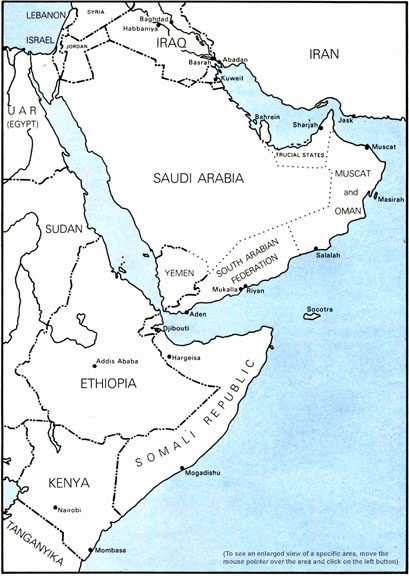
The author's second objective when creating this website was to offer accounts of life on the Middle East Hunter Squadrons during that hectic period using anecdotal material contributed by the pilots and airmen whose duty it was to fly and service this outstanding aircraft. In response to increasing interest being shown by people who served on other Khormaksar-based units, the author has broadened the remit for the website to include their material. To this end, buttons with links to pages for 37 Squadron (Shackletons), 653 (AAC) and the Fleet Air Arm have been added to the Contents column. In addition, further sections comprising highlights from the RAF Khormaksar ORBs, the Station’s rundown and closure plans, plus a brief item on the fledgling South Arabian Air Force, are included.
The Middle East Air Force was formed on 1 March 1961 as a unified command from HQ British Forces Arabian Peninsula having been originally named Middle East Command (Aden), the RAF element being named Air Forces Middle East. With the impending British withdrawal from Aden, authority for the command moved to Muharraq (Bahrain) on 1 September, 1967, and it was renamed HQ British Forces Gulf.
The Middle East Air Force territory covered a vast swathe of Arabia, from Bahrain Island in the Persian Gulf in the north, down through the Trucial States, Muscat and Oman, the South Arabian Federation and across the Horn of Africa to Kenya, a distance of some 2,500 miles. The centre of operations was located at RAF Khormaksar in the Aden Protectorate. Units based at RAF Muharraq on Bahrain Island in the northern sector maintained constant vigilance as to the behaviour and intentions of nearby Gulf states, Iraq in particular. Intermediate replenishment airfields (known as route stations) were provided at Sharjah, Masirah Island, Salalah and Riyan. To the south, lay Ethiopa and Somalia and beyond that, the lush green plains of Kenya where, close to the city of Nairobi, RAF Eastleigh provided the main operating base for the East Africa region.
The website expanded far beyond the author’s initial concept and the subject matter broadened in scope, an achievement that would not have been possible without the support of all those who contributed their photographs and anecdotes. There is no doubt that the site would not have been so interesting without your support and I would like to offer my sincere thanks to you all.
As with any written work, mistakes will materialise and I am indebted to Ben Bennett who, by his diligent error checking, kept them to a minimum.
If you have any comments, suggestions for improvements or contributions you wish to make to this website, please contact the author, Ray Deacon.
New Books
My longer term aim was to produce a book based material from this website. A prominent publisher, Pen & Sword Books Ltd, took up the challenge but soon realised that an 800-page book was too big. So we agreed that the content should be split into two; one book being a factual account based on official records and documentation, the second comprising a large selection of anecdotes from those who served in the Middle East in the 1960s.
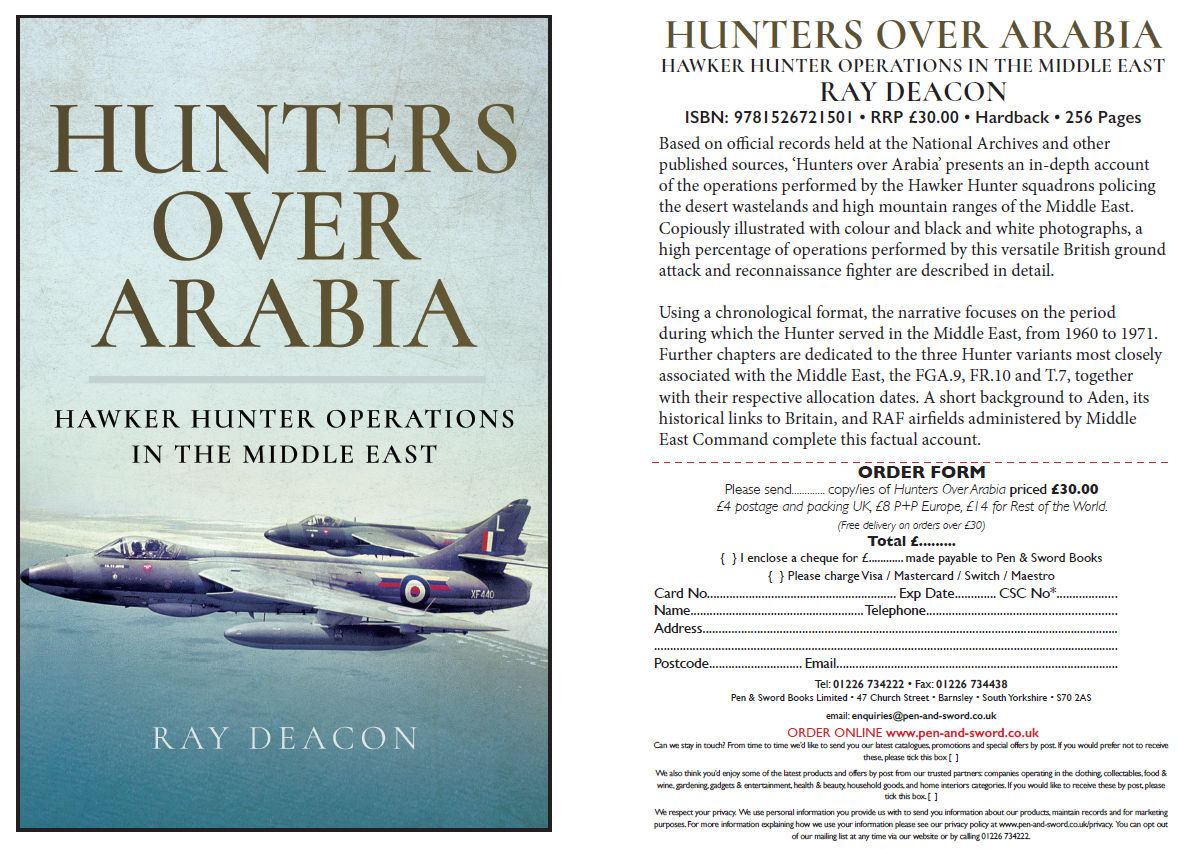
'Hunters over Arabia'
The first of the two books, offers a factual account of aircraft and operations as recorded in official documentation held at the National Archives in Kew. It was first published in April 2019.
'Tales from the front line'
This volume comprises forty-nine anecdotes and stories from pilots and airmen who served on the Middle East Hunter squadrons.

Both volumes are 372 pages in size, are fully illustrated with some 300 colour and black & white photographs in each and can be ordered directly from the publisher's website. https://www.pen-and-sword.co.uk/